
Can 20i Handle High-Traffic Websites?

When I first explored options for hosting a high-traffic website, reliability, scalability, and speed were non-negotiable. Naturally, I asked the same question many others have can 20i handle high-traffic websites?
After researching its technical infrastructure, performance benchmarks, and use cases, it’s clear that 20i has been built with high-traffic environments in mind, but that doesn’t mean it’s perfect for every situation.
Here’s what helps it stand out:
- Autoscaling allocates resources dynamically during peak times
- High-frequency enterprise-grade servers help maintain fast load times
- Load balancing and resource isolation reduce the risk of downtime
- CDN with pre-caching supports global content delivery
However, some users report limitations around plan-based resource caps, pricing at higher tiers, and the My20i control panel, which can feel restrictive for rapidly scaling or highly customised setups. In the sections ahead, I’ll explore how these strengths and trade-offs affect real-world high-traffic websites.
What Should You Look for in a Web Host for High-Traffic Websites?

High-traffic websites place considerable strain on hosting infrastructure. Whether you’re running an e-commerce store, a content-driven platform, or a SaaS application, sudden traffic surges can slow down performance or crash poorly optimised servers.
A suitable host must offer:
- Scalability: The ability to allocate more resources as traffic grows.
- Speed and Performance: Fast response times under load.
- Isolation: Protection from neighbouring websites affecting your resources.
- Caching and CDN Integration: For global, fast content delivery.
- No Arbitrary Limits: No resource throttling when usage increases.
Without these features, high-traffic scenarios, like flash sales, viral content, or product launches, can cause extended downtime, lost revenue, and frustrated users.
How Does 20i Optimise Hosting Performance for Peak Traffic?
While 20i promotes itself as a platform designed for high-traffic websites, its infrastructure comes with some limitations that can affect scalability for demanding projects.
The platform relies on a shared cloud environment, meaning resources are pooled rather than fully dedicated. Although Autoscaling can help during traffic spikes, it does not always guarantee stable performance during sustained or unpredictable surges.
Users also have limited visibility into server configurations, making it harder to fine-tune performance. While high-frequency servers are used, customers cannot select or adjust hardware settings. Resource allocation is controlled centrally, which can restrict flexibility for complex applications.
Concerns with Performance Optimisation:
- Autoscaling may not respond fast enough
- No hardware or server transparency
- Shared cloud resources limit consistency
- Advanced tuning options are restricted
These factors can affect performance under heavy load.
Is 20i Reliable During Sudden Traffic Spikes or Viral Surges?

One of the key tests of any hosting provider is its ability to remain stable under unpredictable conditions. Whether it’s a flash sale or a piece of content going viral, spikes in traffic can push hosting environments to their limit.
20i handles such scenarios well through load balancing, which distributes user requests across multiple servers to prevent overloading a single point. This ensures minimal latency and downtime, even when thousands of users are accessing your site simultaneously.
Another major benefit is the platform’s no artificial caps policy, which means you’re not limited by arbitrary thresholds on resource use. This, coupled with isolation from other users, ensures you get the resources you need when it matters most.
Are There Any Limitations to 20i’s High-Traffic Handling Capabilities?
While 20i performs impressively across many benchmarks, it’s not without its limitations. One notable drawback is that users don’t get full control over low-level server configurations, which may be necessary for highly specialised or custom-built applications.
Moreover, while autoscaling and load balancing are included, there’s no dedicated hosting tier, which some enterprise-level businesses might expect for ultimate resource control and guaranteed isolation.
There’s also a reliance on their proprietary cloud platform, which lacks some of the wider integrations or ecosystem benefits that come with using larger cloud infrastructures.
Potential Drawbacks at a Glance:
- Limited server-level customisation for advanced users
- No dedicated hosting for maximum isolation
- Proprietary cloud may not suit complex multi-cloud environments
How Does 20i Compare to Other Hosting Providers for High-Traffic Sites?
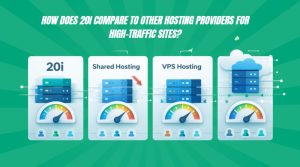
When assessing 20i against other hosting providers known for managing high-traffic sites, the picture becomes clearer.
Feature Comparison:
| Feature | 20i | Typical Shared Hosting | VPS Hosting | Premium Cloud Hosting |
|---|---|---|---|---|
| Autoscaling | Yes | No | Limited | Yes |
| Load Balancing | Yes | No | Manual Setup | Yes |
| Resource Isolation | Yes | No | Partial | Yes |
| Customisation Options | Limited | Limited | High | High |
| CDN with Pre-Caching | Included | Optional | Optional | Optional/Extra Cost |
| Control Panel | Custom | cPanel/Other | Varies | Varies |
Ideal Use Cases:
| Website Type | Is 20i Suitable? | Notes |
|---|---|---|
| E-commerce | Yes | Handles traffic spikes during promotions |
| Media/Content Portals | Yes | Ideal for viral traffic scenarios |
| SaaS Applications | Yes | Scales well with growing user bases |
| Custom Dev Environments | Maybe | May lack required server-level access |
| Enterprise/Corporate Sites | Maybe | No dedicated server plans currently |
This comparison shows that 20i fits neatly between basic shared hosting and premium cloud solutions, offering the best of both worlds for most use cases.
Who Should Choose 20i for Their Growing or High-Traffic Website?
If you’re running an e-commerce business, managing a growing blog, or building a scalable SaaS product, 20i presents a highly viable option.
The platform is optimised for:
- Businesses with seasonal or promotional spikes in traffic
- Websites experiencing viral traffic events
- High-growth startups scaling infrastructure
- Agencies managing multiple client sites with variable loads
While it may not offer dedicated hosting options, its autoscaling, load balancing, and performance isolation features provide all the core elements necessary for sustained performance during heavy traffic periods.
Conclusion
In my experience researching and evaluating various hosting platforms, 20i holds up impressively when it comes to managing high-traffic demands. Its combination of autoscaling, performance-focused infrastructure, CDN integration, and resource isolation makes it a powerful choice for growing websites.
That said, it may not be the best fit for projects needing dedicated server access or complex cloud configurations. But for most businesses and website owners expecting spikes or consistent growth, it delivers solid performance and value. To learn more about 20i, read our in-depth 20i hosting review, where we analyse uptime, speed tests, support quality, and how it compares to other providers.
